

ACE Data Recovery
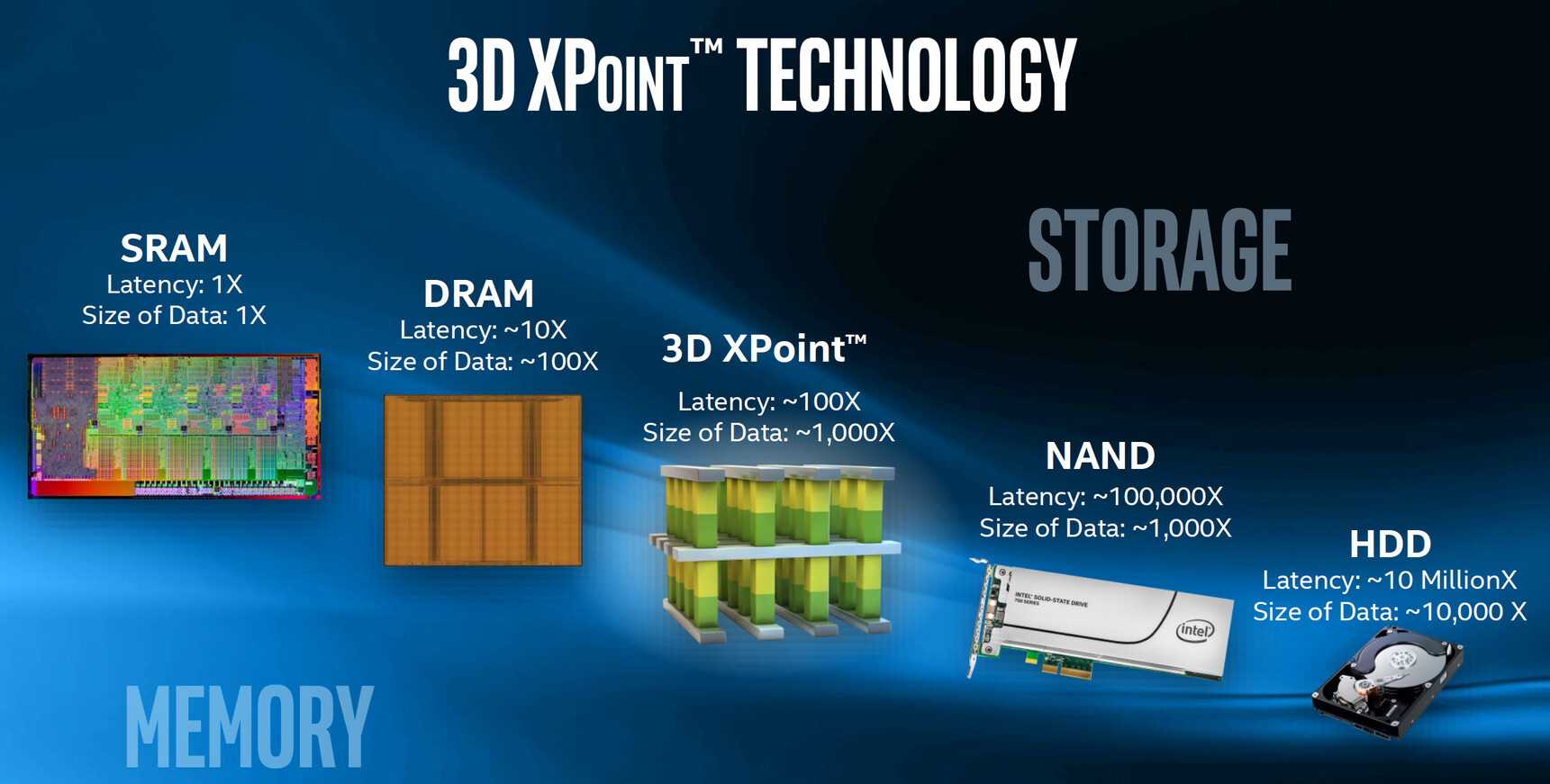
The Intel® Optane™ Memory H10 combines Intel® Optane technology and Intel® QLC 3D NAND technology, providing a unified solution for memory and storage on a single M.2 2280 form factor. This implemntation of 3D XPoint products offers system responsiveness and storage capacities, accelerating everyday tasks, managing large media and gaming files, and running applications efficiently. 3D XPoint (3D Cross Point) is a non-volatile phase change technology developed by Intel and Micron that serves as both memory and storage. It offers advantages such as being less expensive and denser than dynamic RAM (DRAM), while also being faster and consuming less power compared to solid state drives (SSDs) that utilize NAND flash chips.
One of the unique characteristics of 3D XPoint is its byte addressability, making it usable as both main memory and secondary RAM. Its non-volatile nature allows it to replace traditional SSDs or hard drives, or work in conjunction with them. Intel's Optane technology, for example, combines XPoint with an SSD, utilizing the faster retrieval capabilities of XPoint to store files in its memory bank.The architecture of 3D XPoint differs from other flash products. It is believed to be based on phase-change memory technology, employing a transistor-less, cross-point architecture where selectors and memory cells are positioned at the intersection of perpendicular wires. These cells, made of an unspecified material, can be individually accessed by sending a current through the top and bottom wires that touch each cell. The storage density of 3D XPoint can be increased by stacking cells in three dimensions.
3D XPoint is commonly used as an additional storage layer between flash and DRAM. High-intensity data and applications that benefit from high speeds are stored on the Optane layer, while less frequently accessed data and applications are stored on SSD disks. Intel anticipates that the 3D XPoint Optane SSD will be utilized for high-performance storage and caching, as well as to extend and replace memory. According to their Intel's projections, users can potentially increase server memory up to eight times and displace DRAM by a ratio of up to 10:1 for select workloads.
Latest Publications
By following these guidelines and avoiding common mistakes, you can extend the lifespan of your flash drive and protect your valuable data
Read more..
Understanding and Unraveling the Mystery of Formatted SSDs: Can Deleted Data Be Recovered?
Read more..